About
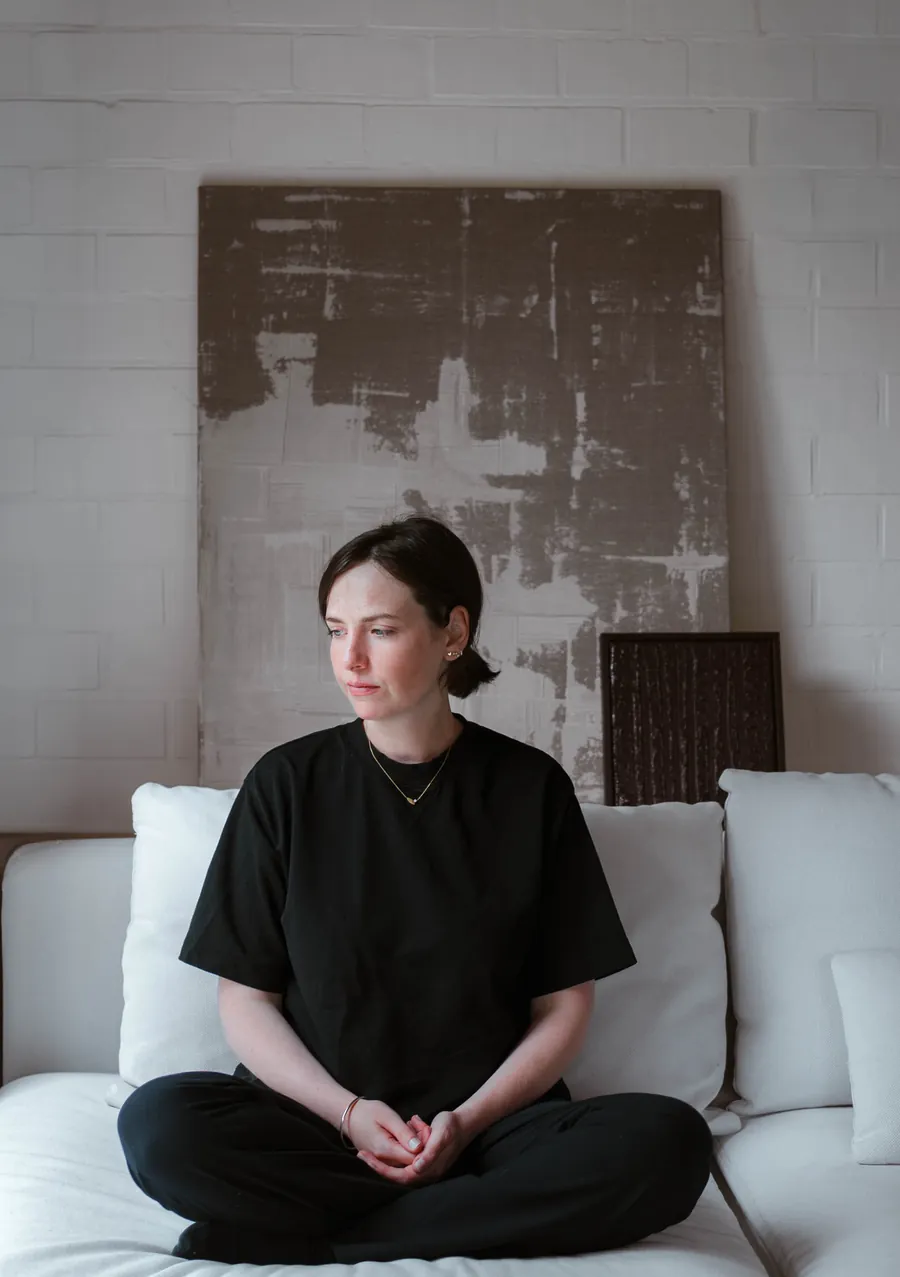
Liesbet Neesen, architect and artist.
For more than thirteen years she designed high-end homes, working with space, material and light. Painting is now at the heart of her practice, but the questions haven’t changed: how does a surface relate to the space around it, and what does light do with it?
Her paintings are built up from thick layers of pigment. Up close, they’re a landscape of grooves; from a distance, a calm surface that changes with the light. Most of her works aren’t made to dominate a room but to belong in it, adding depth and atmosphere to the interior around them. Only now and then does a piece ask to be the focal point.
Her background in architecture shapes how she thinks about every work: not as an object on its own, but as part of a space and its light. If a work speaks to you, you can simply choose it. If you’re unsure, a photo of the wall or room is often enough for her to suggest the right piece. And if you’d like to choose together, she loves coming by with a selection of paintings.
Her work is part of private collections and realized interior projects in Belgium. Every work is unique, numbered and comes with a certificate of authenticity. Interested in a work, or curious which one would suit your space? Get in touch.
In the press
No press mentions yet.
see all mentionsExhibitions
No exhibitions yet.
all exhibitionsBackground
Liesbet Neesen trained and worked as an architect and interior architect for thirteen years, at the drawing table and on the building site, designing high-end homes. Alongside that work, she began to paint. Today painting is the heart of her practice, shaped by everything architecture taught her about scale, proportion, material and light.
In the studio
Slow work, layer by layer.
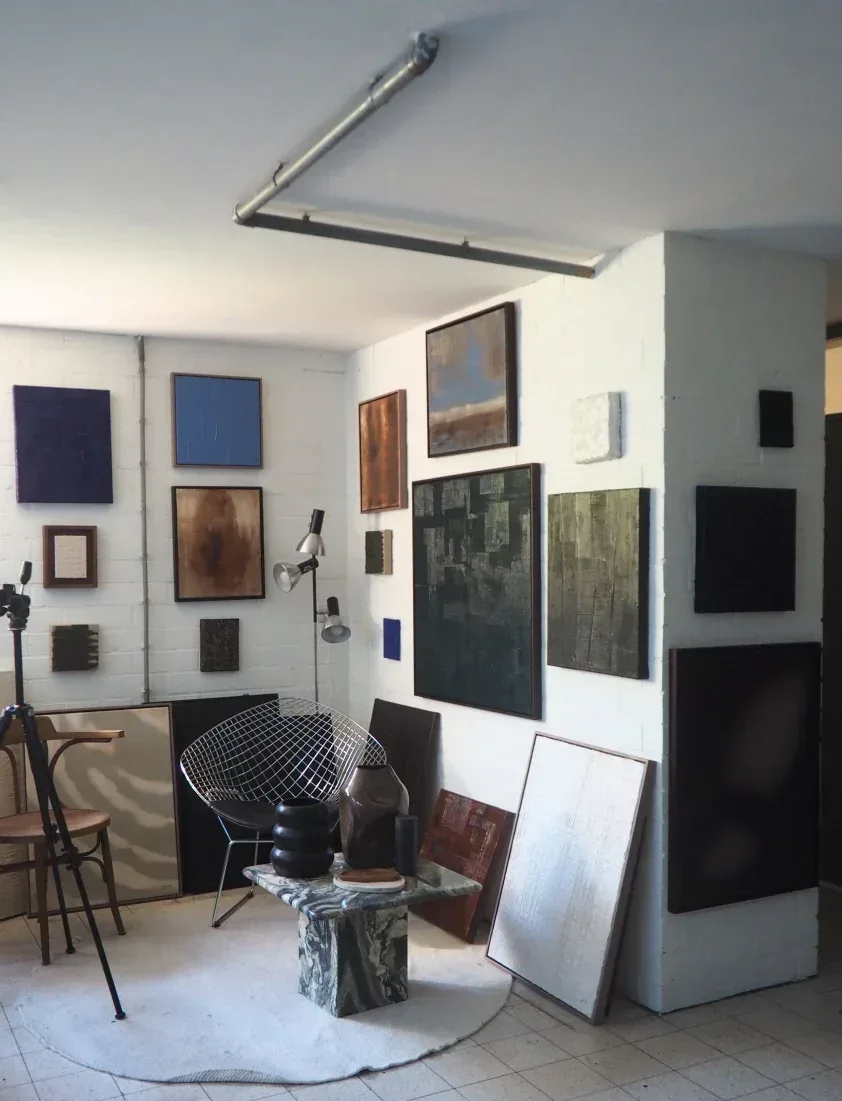
A work begins with a feeling more than a plan. She builds up the pigment in thick layers, looking for a texture that holds her attention and for the way light moves across it. Then she leaves it for days, until it has formed its own skin.
She works on the floor, on several pieces at once. Now and then she stands them against the wall to see them from a distance, then lays them down again and keeps going. Much of what she makes gets painted over: for every work that stays, there are several that don’t. What remains is what she’d still want to see in ten years.